
What Is Website Traffic and Why Does It Matter for Your Allied Health Clinic?
Let’s face it, running a busy practice while juggling admin, patient care, and team management doesn’t leave much room for diving deep into digital marketing. But if you’ve got a website (or are planning to invest in one), there’s one concept you do need to understand: website traffic. No, it’s not just a vanity metric….
Let’s face it, running a busy practice while juggling admin, patient care, and team management doesn’t leave much room for diving deep into digital marketing. But if you’ve got a website (or are planning to invest in one), there’s one concept you do need to understand: website traffic.
No, it’s not just a vanity metric. It’s one of the clearest indicators of whether your clinic is visible online and whether potential clients are finding (and trusting) you.
This isn’t about becoming a marketing expert overnight. This is about knowing what’s working for your website, what isn’t, and how to make simple changes that help your ideal clients walk through your doors.
So… What Is Website Traffic, Exactly?
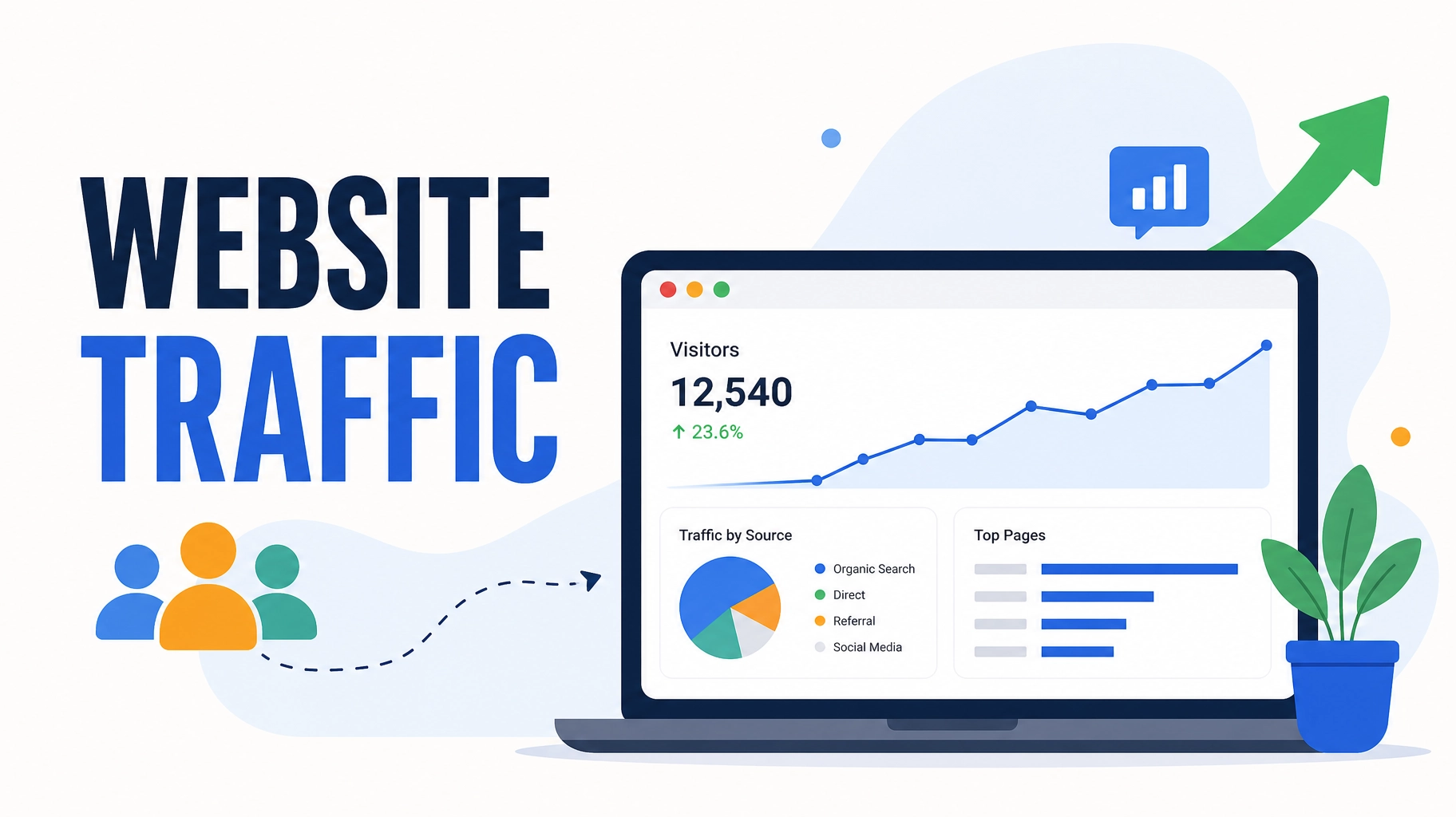
In a nutshell, website traffic is the number of people visiting your site. Every person who lands on your homepage, checks out your services, reads a blog post, or fills out a contact form counts as traffic.
But here’s the thing: not all traffic is created equal.
Understanding how people find and use your site gives you important clues about:
- What local clients are searching for
- Whether they’re engaging with your content
- If your site is helping (or hindering) your ability to grow
Different Types of Website Traffic You Should Know About
Let’s break it down in real terms:
- Organic traffic: These are people who find your site by Googling things like “sports physio near me” or “NDIS OT Melbourne”. This is the gold they’re actively searching for services you offer.
- Direct traffic: Someone already knows your name and types your URL straight into their browser. This is often repeat clients or word-of-mouth referrals.
- Referral traffic: Visitors who clicked on a link to your site from somewhere else, maybe a local directory, a blog, or a partner organisation.
- Social traffic: Comes from places like Instagram, Facebook, or LinkedIn. Posting about a new blog, patient education tips, or clinic news? That’s how you bring them in.
- Email traffic: People visiting your site from newsletters or email promotions (like appointment reminders or seasonal promos).
- Paid traffic: From Google Ads or social media advertising. Great for boosting exposure when you need fast visibility, like opening a new location or launching a new service.
Why Website Traffic Actually Matters for Your Practice
You might be thinking, “I’ve already got bookings coming in—do I really need to worry about traffic?”
Here’s why the answer is a strong yes:
1. More Visibility = More Bookings
You can’t help people if they can’t find you. More traffic (especially from locals searching for your services) means more opportunities to book clients who need your expertise.
2. It Shows What’s Working (or Not)
Traffic data helps you understand what pages your audience visits, what content they care about, and where they drop off. It’s like a digital health check for your website.
3. Boosts Your Google Ranking
Consistent, quality traffic signals to Google that your website is trustworthy and relevant. That can help you show up higher in local searches, which is key if you’re in a competitive suburb.
4. Increases Trust
People will often check your website before they decide to call. If they land on a site that looks professional, is easy to navigate, and speaks to their needs, they’re more likely to choose you.
5. Supports Practice Growth
Whether you’re building an email list, growing your NDIS caseload, or trying to scale your clinic website traffic gives you the foundation to do it.
Key Metrics Worth Keeping an Eye On
You don’t need to get bogged down in spreadsheets, but keeping tabs on a few simple stats is powerful:
- Unique visitors: How many individuals visit your site
- Bounce rate: How many leave without clicking beyond the first page
- Session duration: How long people spend on your site
- Conversion rate: How many people book, enquire, or take action
How to Drive More (and Better) Traffic to Your Clinic Website
Here are some practical ways to get more eyes on your site—without needing a full-time marketing team:
Optimise for SEO: Use keywords your ideal clients are actually typing into Google (think “postnatal physio Brisbane” or “paediatric speech therapy Perth”).
Leverage your socials: Sharing helpful posts, client wins (with permission), or educational content can funnel your social media audience to your site.
Create valuable content: Blog about common conditions you treat, answer FAQs, or share rehab tips. This builds trust and boosts visibility.
Build backlinks: Get listed in online directories or collaborate with other local businesses (e.g. GPs or exercise physiologists) who can link back to you.
Improve site experience: Make sure your website loads fast, works on mobile, and makes it easy for people to contact or book in.
Email your list: Share updates, resources, or links to new content to keep past clients engaged and coming back.
More Website Traffic = More People Helped
At the end of the day, your website isn’t just a digital business card. It’s one of your most powerful tools to attract, educate, and convert potential clients.
If your current site isn’t bringing in consistent traffic or you’re unsure how to optimise it, it might be time for a check-up.
Need a hand getting more eyes on your clinic website? At Miti Websites, we work with allied health professionals to boost their visibility and get more of the right traffic through their digital front door.
Reach out for a free website audit and let’s make sure your website is working as hard as you are.